

On November 20, the 2025 Pujiang Innovation Forum Physics and Astronomy Sub-Forum was successfully convened at Tsung-Dao Lee Institute (TDLI). Guided by the Shanghai Municipal Science and Technology Commission and the People's Government of Pudong New Area, and jointly organized by TDLI, the School of Physics and Astronomy at Shanghai Jiao Tong University (SJTU), and the State Key Laboratory of Dark Matter Physics, the forum was themed "In Honor of Prof. Tsung-Dao Lee – When the Largest Meets the Smallest." It facilitated in-depth discussions on cutting-edge topics in physics and astronomy, aiming to carry forward the scientific spirit, stimulate innovative thinking, and promote interdisciplinary integration. Participants including experts and scholars from domestic and international institutions, representatives from collaborating organizations, and faculty and students of TDLI, gathered to explore the mysteries of the universe together.
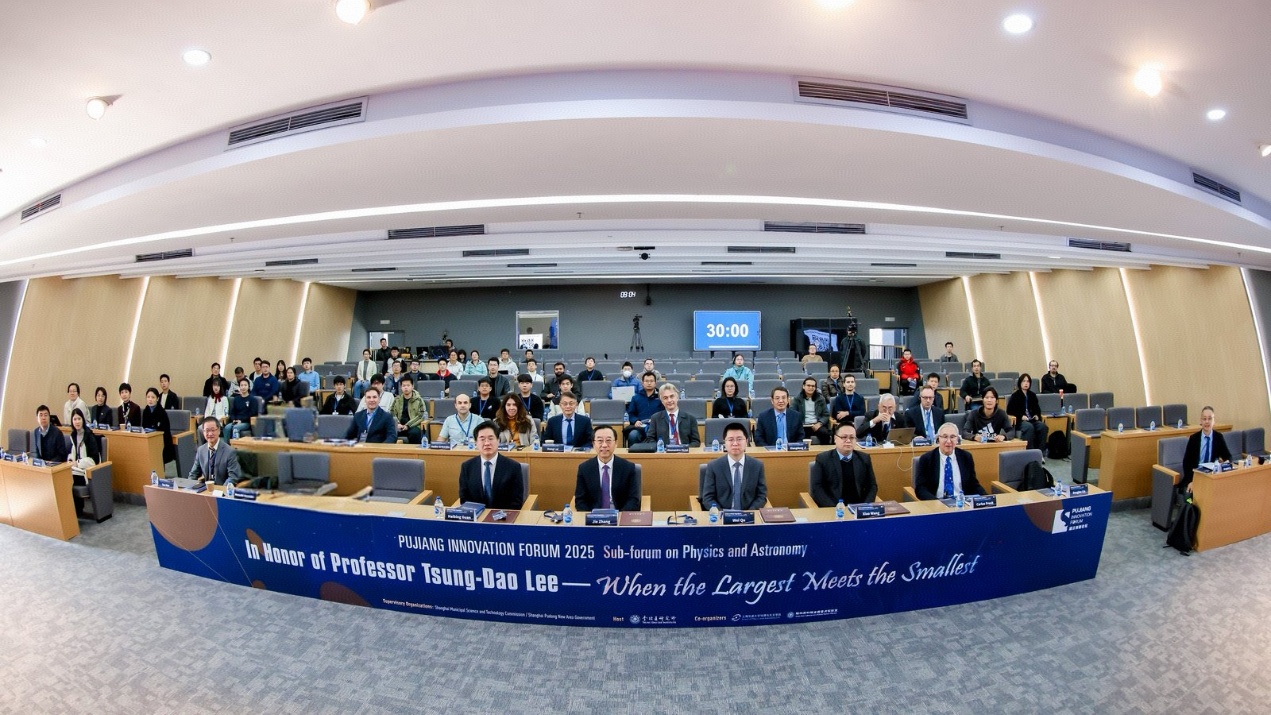
Distinguished attendees included Wei Qu, Deputy Director of the Shanghai Municipal Science and Technology Commission; Xiao Wang, Director of the Science, Technology and Economy Commission of Pudong New District; Jie Zhang, CAS Academician , former President of SJTU and Director of TDLI; Haibing Guan, Member of the Standing Committee of the CPC SJTU Committee and Vice President of SJTU; as well as renowned scholars such as Professor Gabriel Aeppli from ETH Zürich and EPFL; CAS Academician and SJTU Chair Professor Ding Hong; Professor Carlos Frenk at Durham University, UK; Professor Tao Han at the University of Pittsburgh, USA; Professor Xiaogang He at SJTU; Professor Stavro Ivanovski from the Trieste Astronomical Observatory, Italy; Professor Xiangdong Ji at the University of Maryland and SJTU; Professor Dong Lai at SJTU; Professor Douglas Lin from the University of California, Santa Cruz; Professor Michael Ramsey-Musolf at SJTU; CAS Academician and Professor Pan Jianwei from the University of Science and Technology of China; Professor Cristiane Morais Smith from Utrecht University, Netherlands; and Professor Alessandro Vicini from the University of Milan, Italy. The opening ceremony was hosted by Professor Jianglai Liu, Deputy Director of TDLI and Hongwen Distinguished Scholar at SJTU.
Opening Ceremony: A Shared Mission for Innovation
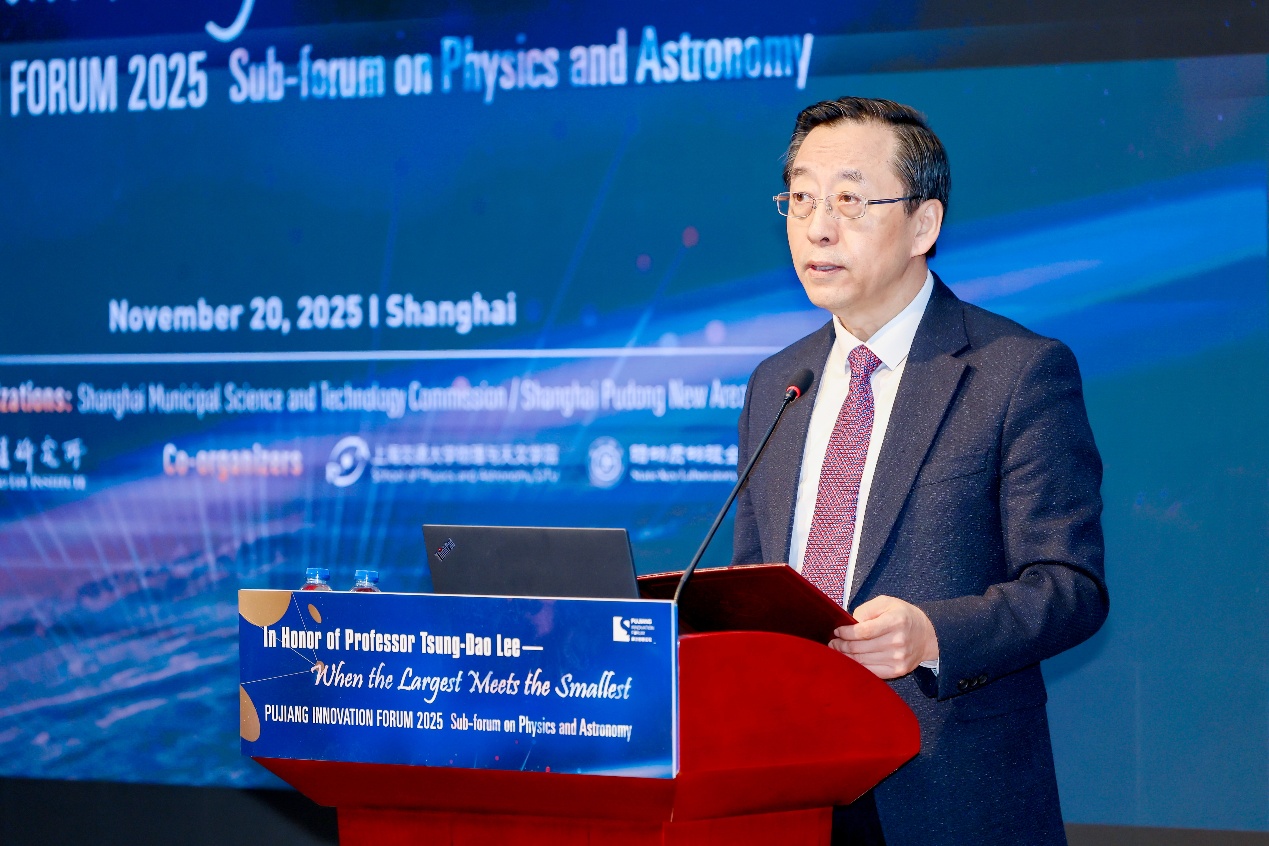
Jie Zhang's Opening Remarks
Jie Zhang delivered the opening remarks. He stated that the forum's theme, "In Honor of Prof. Tsung-Dao Lee – When the Largest Meets the Smallest," represents a contemporary inheritance of Prof. Lee's scientific spirit. The profound connection between the "largest" cosmos and the "smallest" particles, as highlighted by Prof. Lee, remains a core driver advancing fundamental physics and a central research mission steadfastly upheld by TDLI.
As the centennial of Prof. Lee's birth approaches, this academic gathering serves as both a profound tribute to the master's scientific legacy and deep encouragement for the younger generation, inspiring them to courageously push the boundaries of knowledge and collectively chart a new blueprint for humanity's exploration of the unknown.
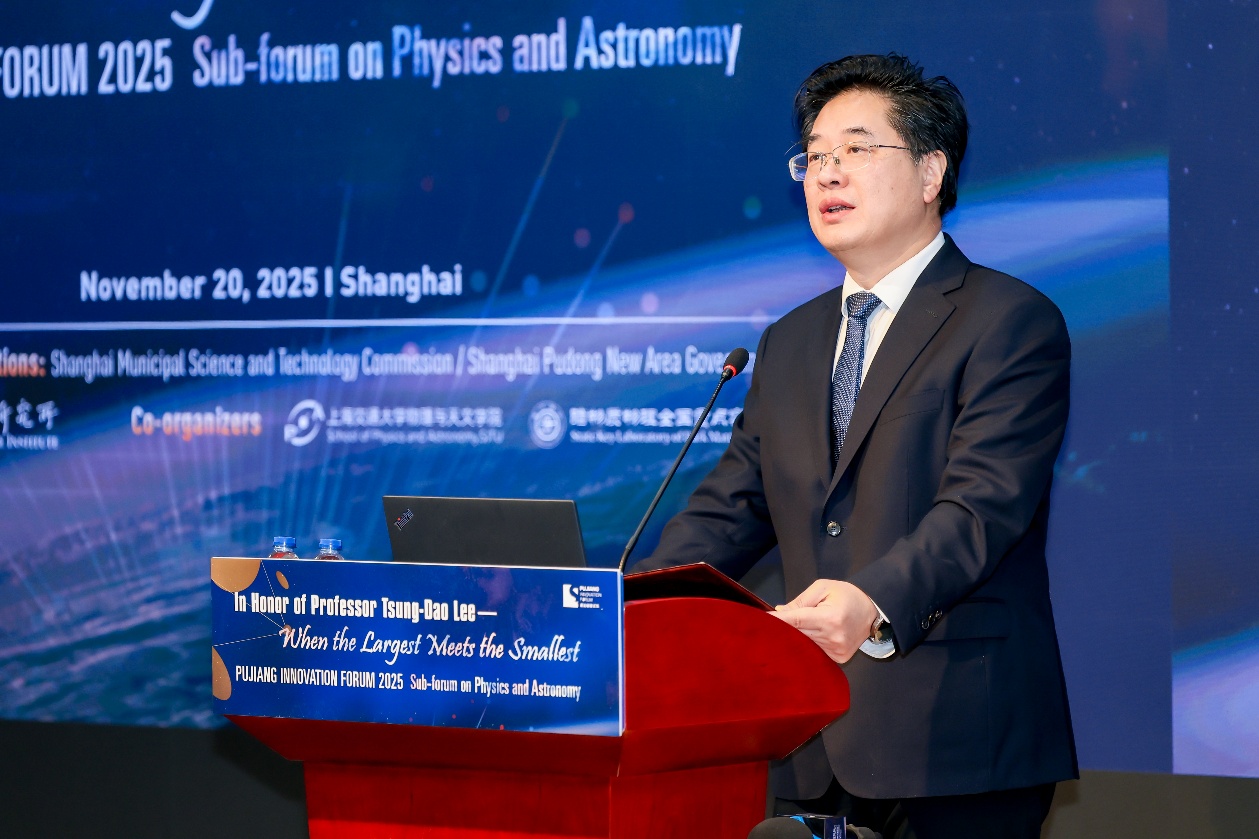
Speech by Haibing Guan
Haibing Guan pointed out that TDLI, as a priority frontier research institute at SJTU, has rapidly developed into a globally recognized academic highland in physics and astronomy, serving as a core engine driving the university's leapfrog development in these disciplines.
He emphasized that TDLI hosting the Pujiang Innovation Forum Physics and Astronomy Sub-Forum for the first time signifies broad recognition of its academic strength and international reputation in fundamental research, also demonstrating Shanghai's leadership and commitment in proactively integrating into the global innovation network.
He expressed his hope that the forum would pool global wisdom, spark innovative ideas, and inject new momentum into the high-quality development of China's basic scientific research.
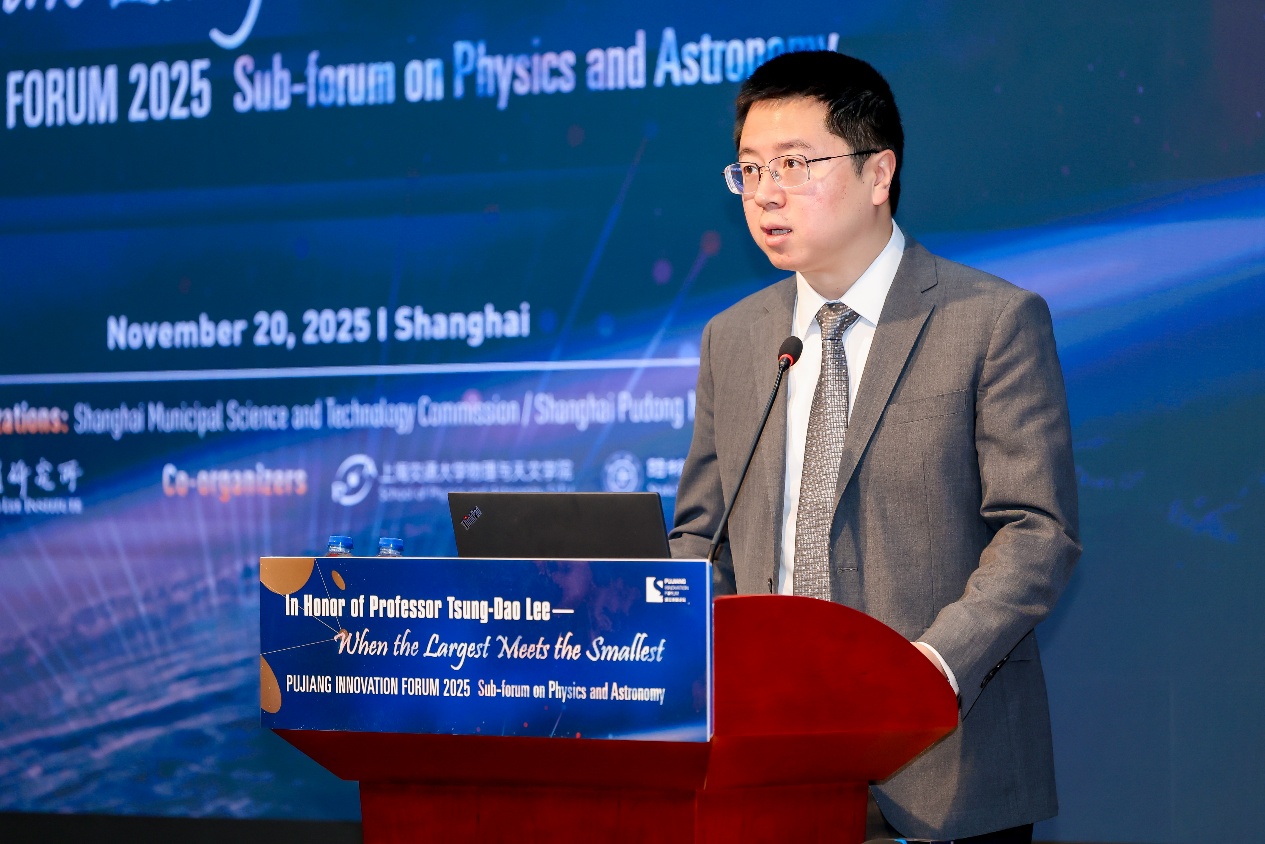
Speech by Wei Qu
Wei Qu emphasized that Shanghai is thoroughly implementing the national long-term plan for basic research, continuously strengthening its role as a source of scientific and technological innovation, and accelerating the construction of a globally influential science and technology innovation center.
He noted that TDLI, as a strategic force in basic research, has become a crucial pillar for Shanghai in serving national sci-tech self-reliance through building a full-chain innovation system integrating "theory-experiment-technology."
He stated that Shanghai will continue to deepen the systematic layout of basic research, gather top global intellect, and strive for more groundbreaking achievements in frontier fields like physics and astronomy, contributing Shanghai's wisdom to the global sci-tech innovation network.
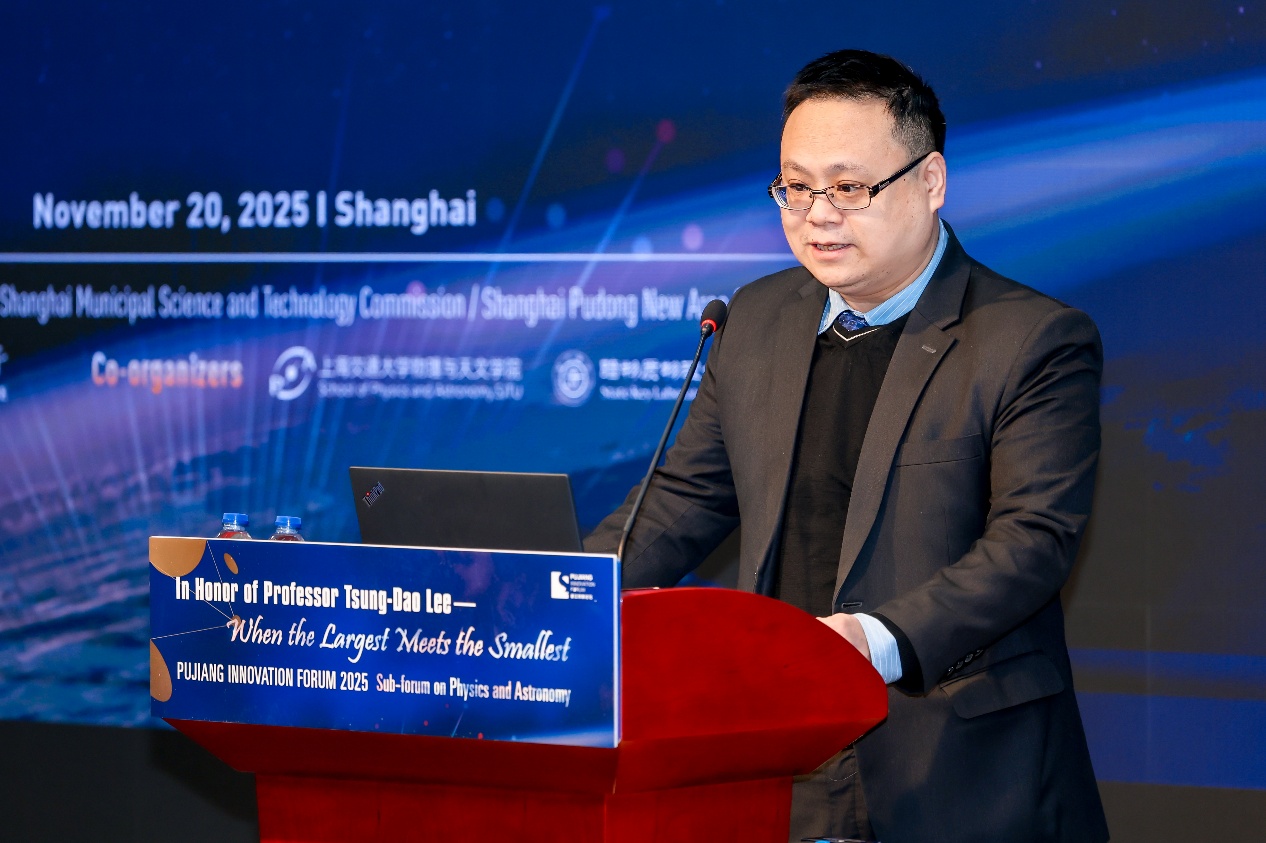
Speech by Xiao Wang
Xiao Wang stated that Pudong New Area, as the core hub of Shanghai's sci-tech innovation center, consistently treats basic research as the strategic cornerstone for high-quality development.
He noted that since its establishment in Pudong, TDLI has become a vital research highland attracting global top talent and driving original innovation, injecting strong momentum into the regional innovation ecosystem.
He affirmed Pudong's continued commitment to enhancing policy and resource support, fully backing TDLI in conducting pioneering and leading research, achieving more "zero-to-one" breakthroughs, and contributing Pudong's strength to the nation's basic research endeavors.
Keynote Talks: Focusing on Frontier Exploration
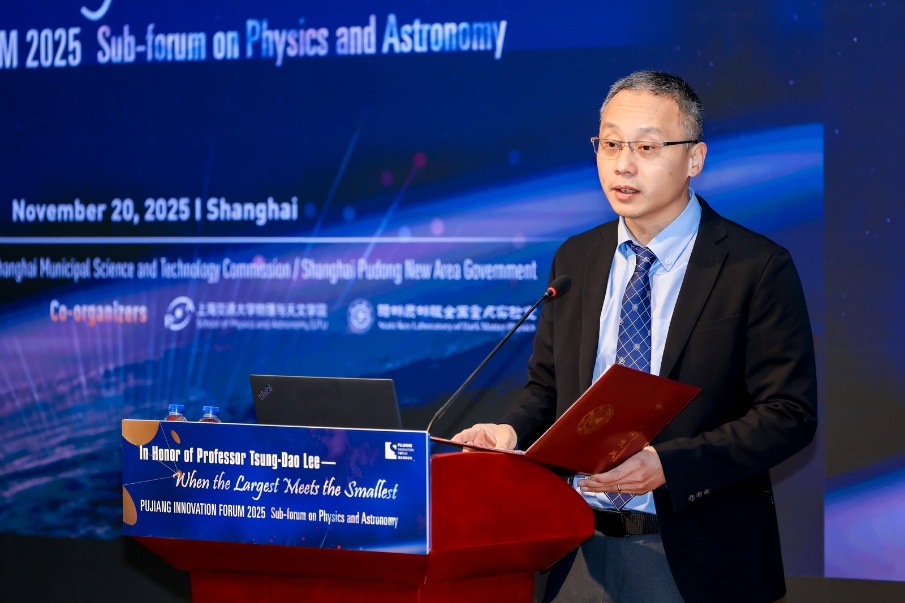
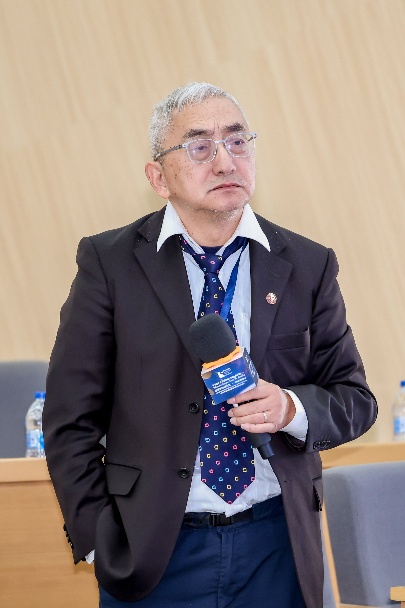
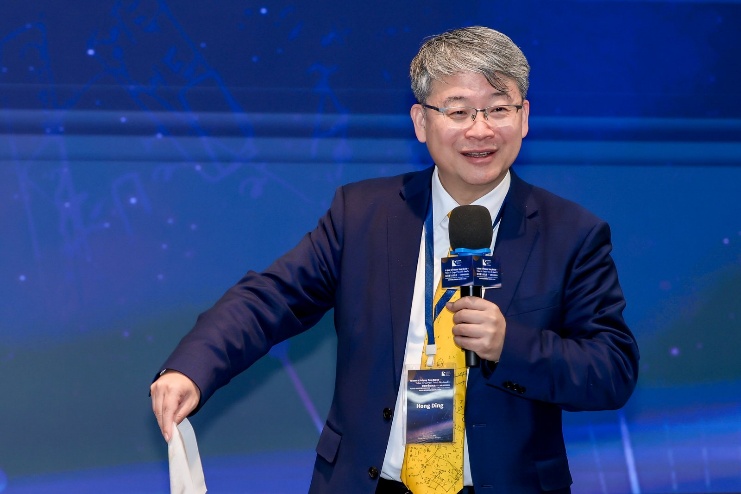
The keynote session hosts included Jianglai Liu, Xiaogang He, Dong Lai and Hong Ding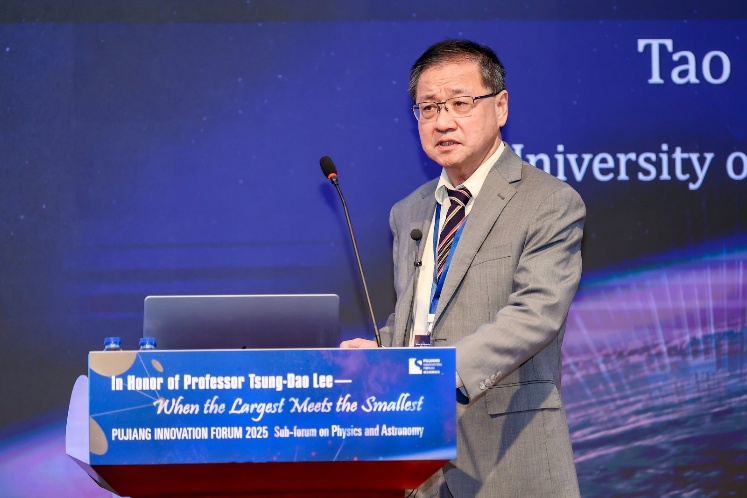
Keynote talk by Tao Han
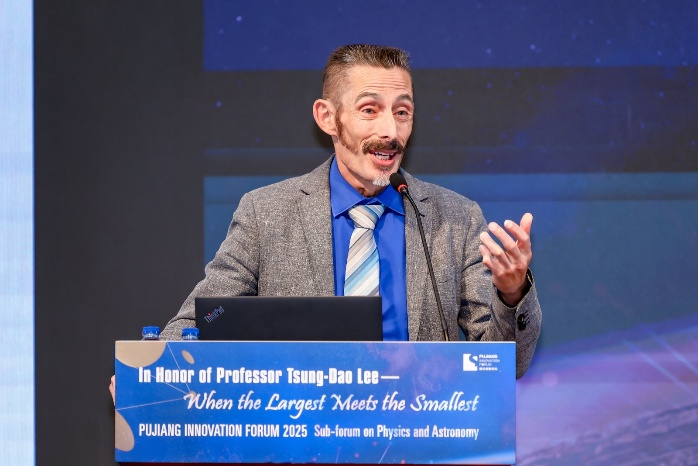
Keynote talk by Michael Ramsey-Musolf
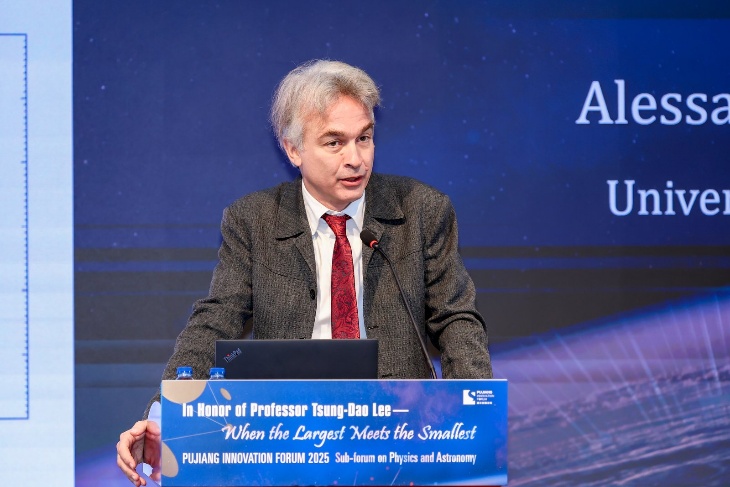
Keynote talk by Alessandro Vicini
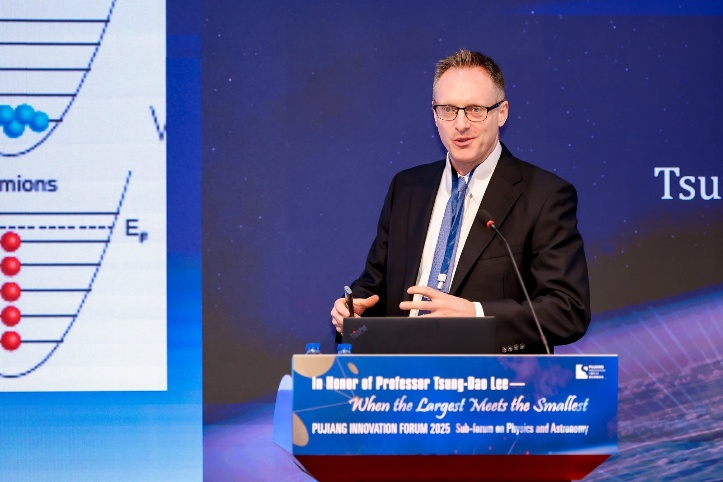
Keynote talk by Jason Evans
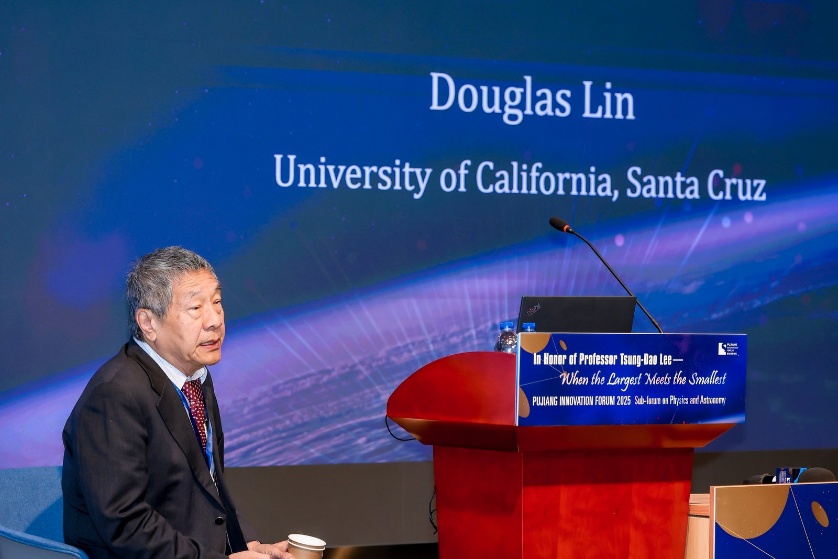
Keynote talk by Douglas Lin
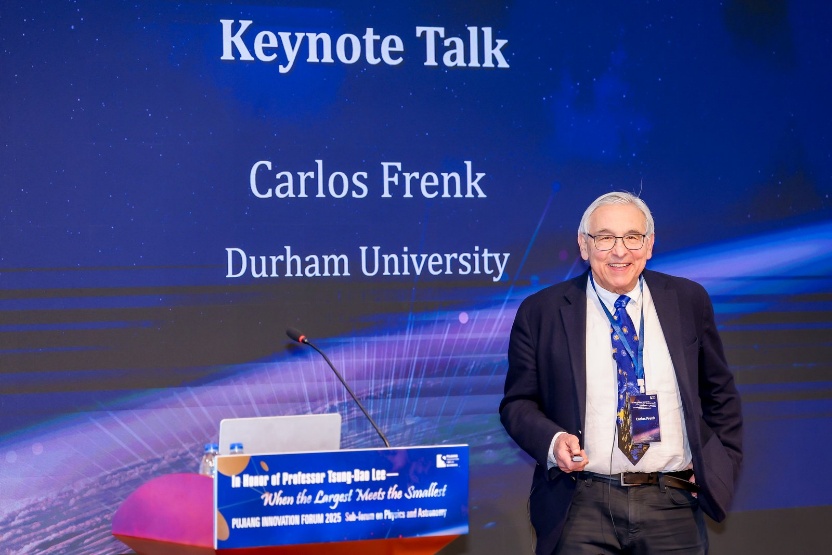
Keynote talk by Carlos Frenk
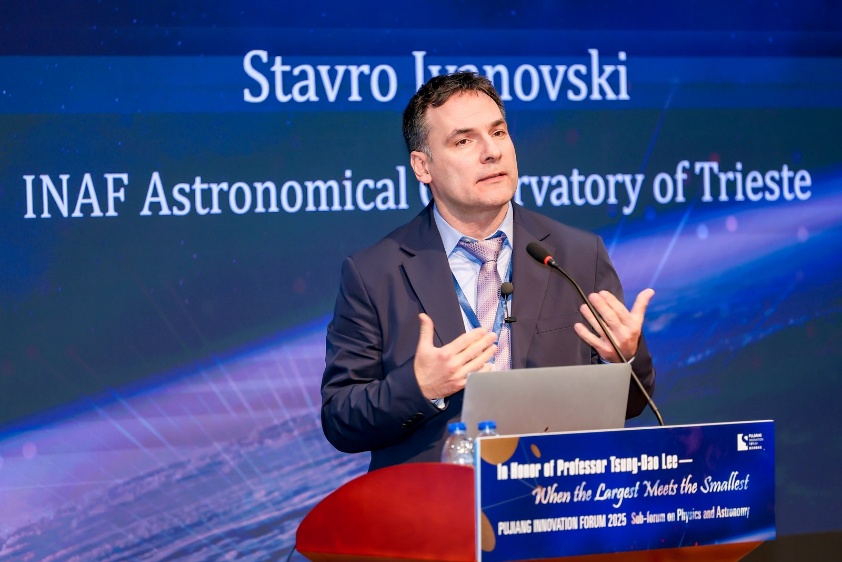
Keynote talk by Stavro Ivanovski
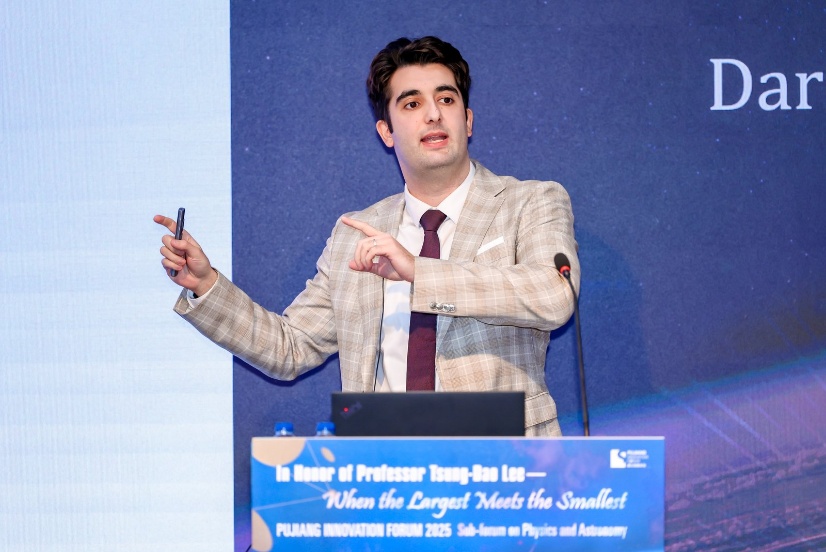
Keynote talk by Darius Modirrousta-Galian
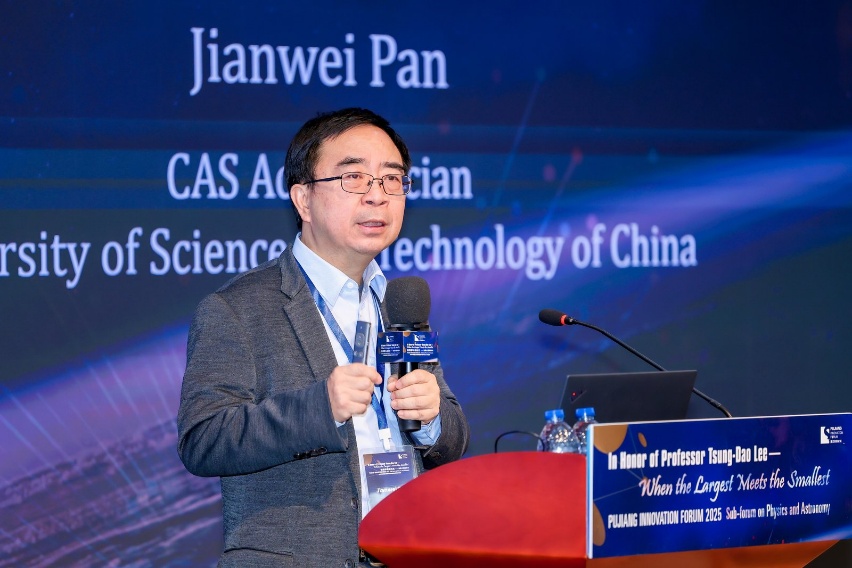
Keynote talk by Jianwei Pan
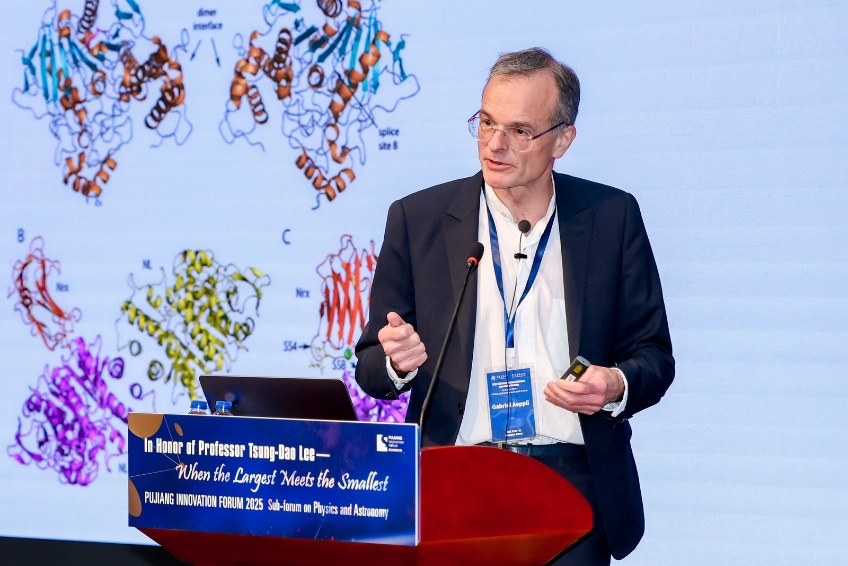
Keynote talk by Gabriel Aeppli
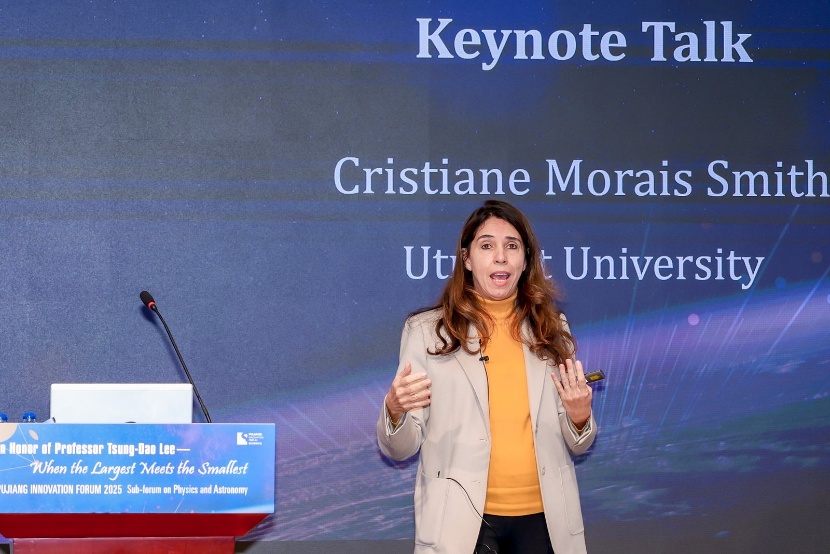
Keynote talk by Cristiane Morais Smith
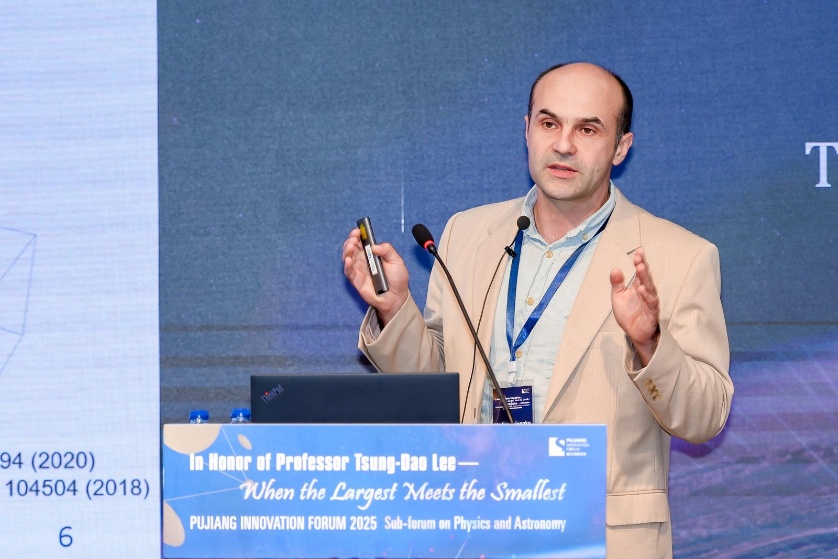
Keynote talk by Vadim Grinenko
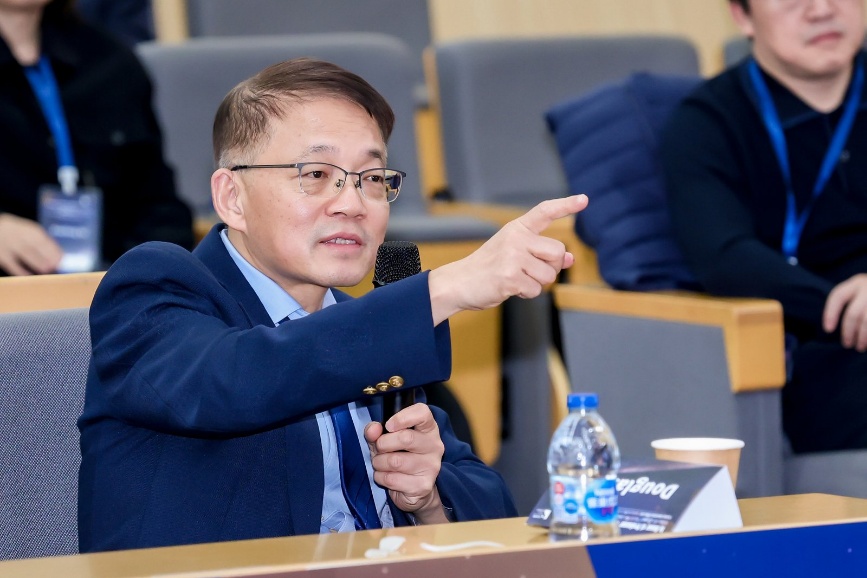
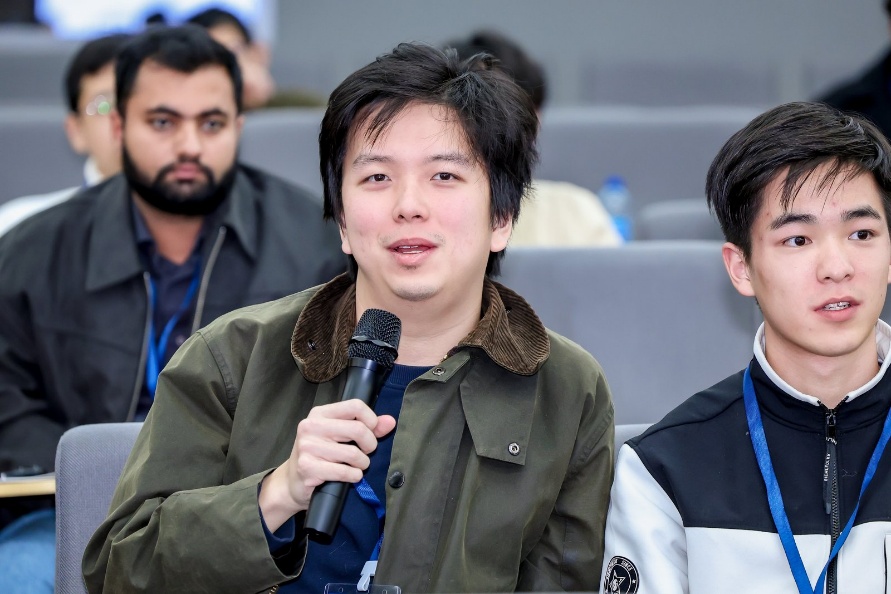
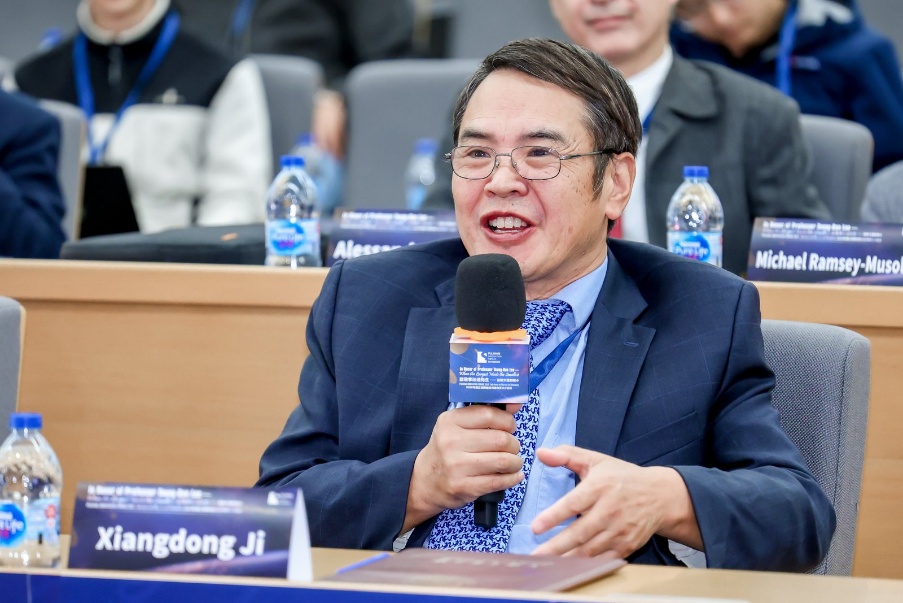
During the keynote talks, guest speakers shared cutting-edge advancements across physics and astronomy.
In particle physics and searches beyond the Standard Model (BSM), Han Tao elaborated on constructing quantum states using spin states etc., from high-energy collider data and performing quantum tomography. Alessandro Vicini detailed the status of precision tests for the electroweak sector of the Standard Model, highlighting challenges for high-precision experiments. Several scholars proposed new BSM scenarios: Michael Ramsey-Musolf suggested that a "cosmic condensation" process in the early universe might explain matter-antimatter asymmetry; Jason Evans analyzed the bosonic enhancement effect for ultralight bosonic dark matter, offering new avenues for detecting dark photons.
In cosmology and astrophysics, Carlos Frenk summarized the remarkable success of supercomputer simulations in replicating cosmic evolution, while noting unresolved questions like the nature of dark matter and dark energy. On galactic scales, Douglas Lin revealed the process where stellar-mass black holes merge with main-sequence stars in Active Galactic Nuclei, triggering strong gravitational waves and facilitating supermassive black hole growth.
In quantum information and novel states of matter, Pan Jianwei comprehensively showcased China's breakthroughs in quantum communicationand outlined the vision for a global quantum network. Exploring new states of matter, Vadim Grinenko reported evidence for electronic quadruplet condensation in iron-based superconductors, while Cristiane Morais Smith uncovered unique electron-photon behaviors in fractal dimensions and topology induced by the fractal geometry itself.
Furthermore, reports highlighted interdisciplinary applications of physical techniques. Gabriel Aeppli introduced non-destructive X-ray ptychography, capable of 3D imaging with nanometer resolution, holding great potential for integrated circuit inspection and brain science.
In planetary science, Stavro Ivanovski discussed habitability models integrating planetary atmosphere, magnetic field parameters, etc.; Darius Modirrousta-Galian proposed a new unified framework for atmospheric escape combining hydrodynamics and molecular kinetics.
These reports fully demonstrated significant progress spanning interdisciplinary fields from microscopic particles to the macroscopic cosmos, and from fundamental theory to cutting-edge technology.
Roundtable Discussion: Igniting Intellectual Sparks
The roundtable discussion, moderated by Michael Ramsey-Musolf, featured four panelists: Carlos Frenk, Tao Han, Dong Lai, and Cristiane Morais Smith.
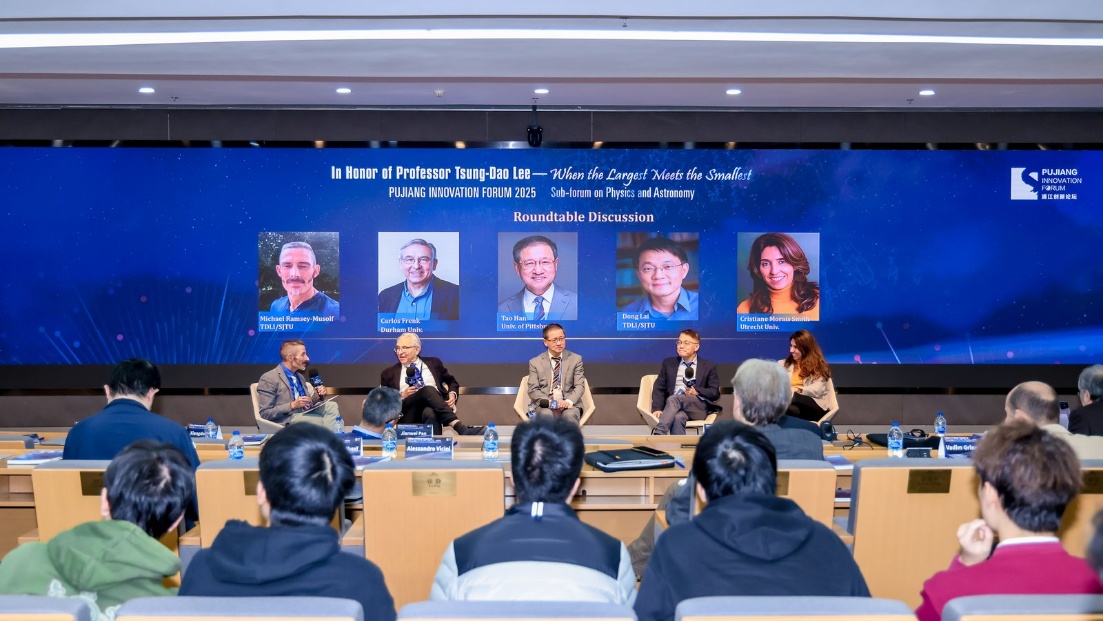
The discussion delved into themes of international scientific collaboration, core frontiers in physics and astronomy, and the growth of young scholars. Panelists first reflected on Prof. Tsung-Dao Lee's profound contributions to promoting Sino-US scientific exchange and supporting young talent, emphasizing the need for scientists to uphold an open and inclusive spirit of collaboration and build a scientific community, especially amidst complex international landscapes.
Academically, the guests identified core scientific challenges in particle physics, cosmology, dark matter, and quantum information as pivotal directions and fundamental drivers for revolutionary breakthroughs in basic science.
Regarding nurturing young scientific talent, they encouraged early-career researchers to stay true to their scientific initial aspirations, seeking a dynamic balance between ideal and reality.
The panelists particularly noted that research breakthroughs often emerge from interdisciplinary integration, urging young talents to actively embrace opportunities arising from cross-disciplinary research, explore the unknown with pioneering thinking, persevere through the challenges inherent in basic research, and collectively propel physics and astronomy to new heights.
The successful convening of this Forum has not only provided a high-level platform for participants to exchange ideas and effectively stimulated original innovation, but also significantly enhanced the international influence both of Tsung-Dao Lee Institute and the Pujiang Innovation Forum brand, providing solid support for China's pursuit of high-level self-reliance and strength in science and technology.
Editor on Duty: Tao Qingxiao