

The 3rd Shanghai Assembly on Cosmology and Structure Formation successfully held recently at the Tsung-Dao Lee Institute (TDLI) of Shanghai Jiao Tong University (SJTU). Held from November 17 to 21, 2025, the conference was co-organized by the Department of Astronomy(PA) and Astronomy and Astrophysics Division(TDLI) of SJTU, with support from the State Key Laboratory of Dark Matter Physics.
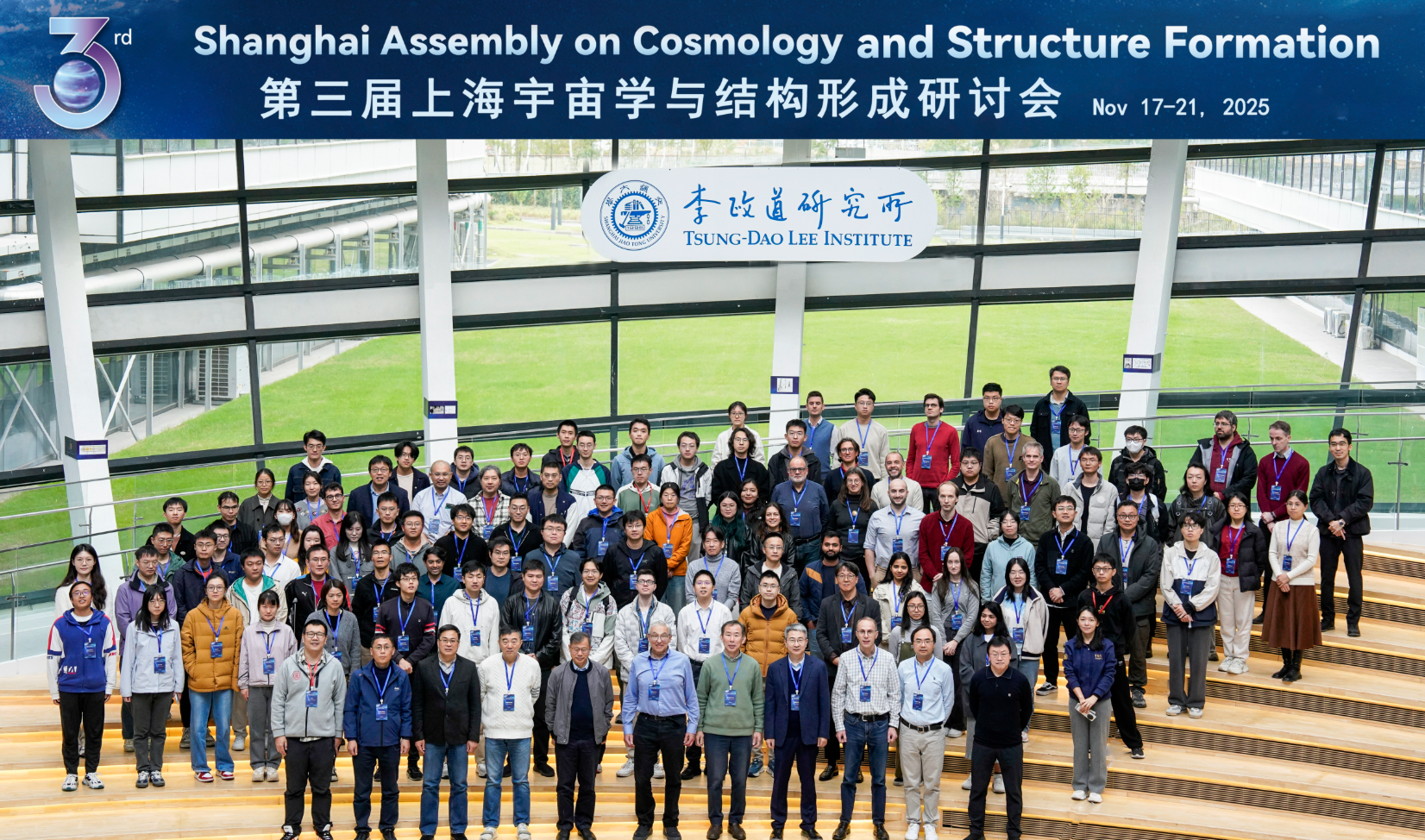
Focusing on cutting-edge topics in cosmology and structure formation, the Assembly attracted over 130 experts and scholars from renowned institutions worldwide. Participants hailed from Durham University (UK), Leiden University (Netherlands), University of Bologna (Italy), Korea Institute for Advanced Study, Kavli IPMU (Japan), and numerous leading Chinese institutions, including SJTU, Tsinghua University, Peking University, Beijing Normal University, Sun Yat-sen University, Yunnan University, the National Astronomical Observatories, Purple Mountain Observatory, Shanghai Astronomical Observatory, and Academia Sinica (Taiwan, China).
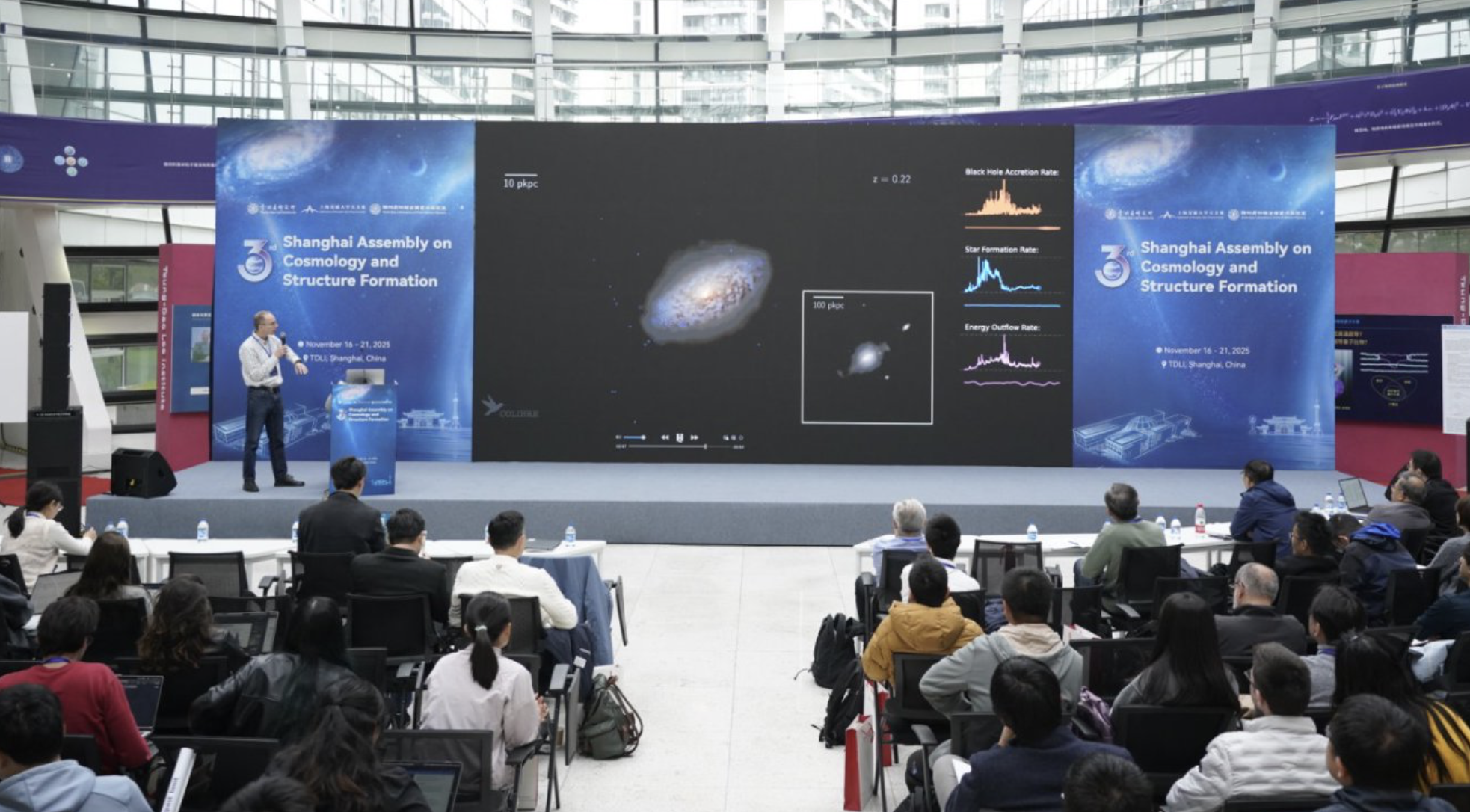
Through invited talks, reports from major international sky survey projects, and poster sessions, attendees engaged in in-depth discussions on core scientific issues such as the nature of dark matter and dark energy, cosmic large-scale structure, and galaxy formation and evolution.
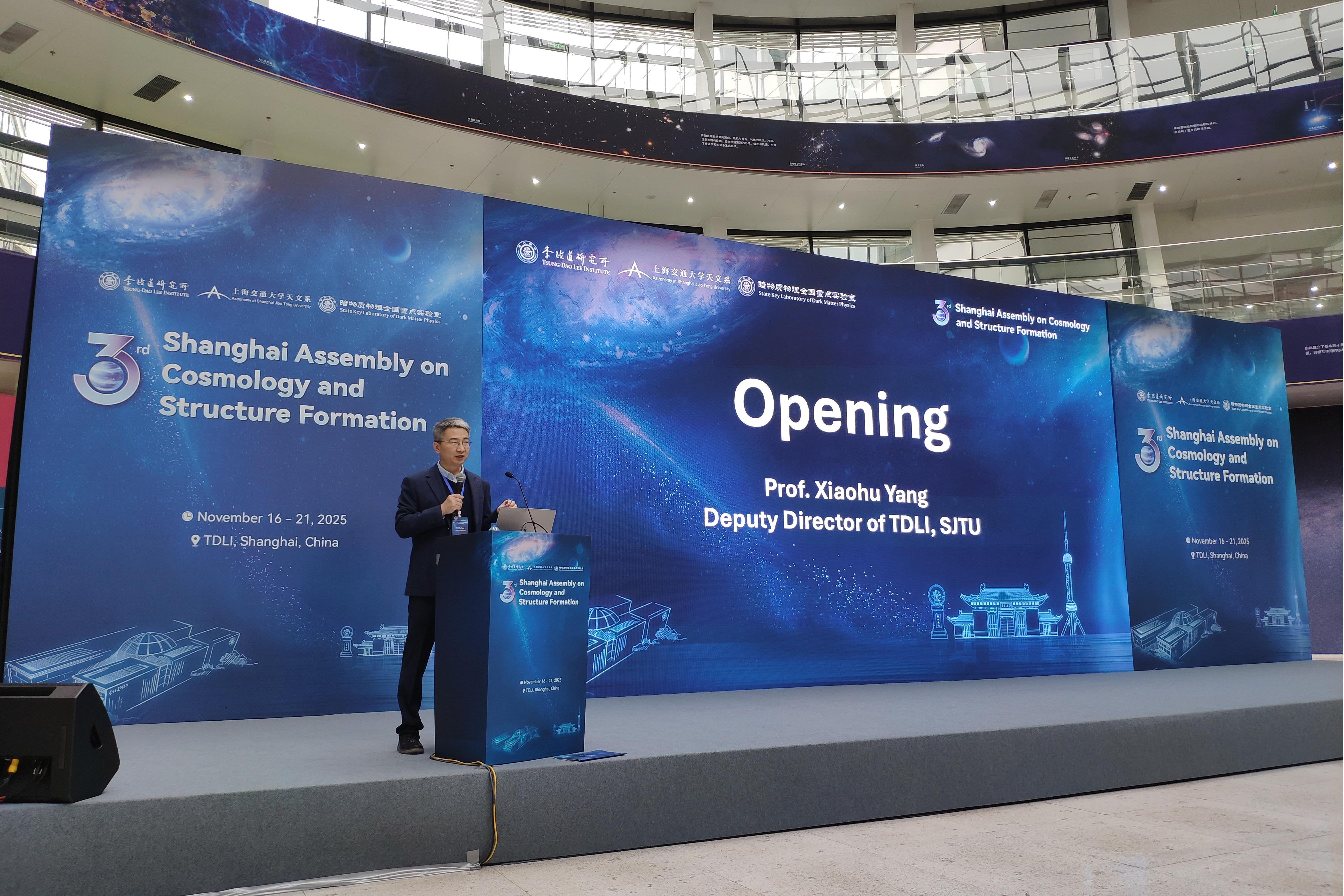
Professor Yang Xiaohu, Deputy Director of the Tsung-Dao Lee Institute and initiator of the Assembly, attended and delivered an opening address. The conference chairs were Associate Professor Zhai Zhongxu, Associate Professor Yu Yu, and Associate Professor Alessandro Sonnenfeld from the Department of Astronomy, School of Physics and Astronomy at SJTU. Professor Han Jiaxin, chair of the first and second Assemblies, provided concluding remarks at the closing ceremony.
Cosmic structure formation and galaxy evolution are central themes in modern astrophysics. Scientists aim to reconstruct the complete history of the universe, from initial density fluctuations to the present day, by combining theoretical modeling, numerical simulations, and observational data. The field has now entered an era of "precision cosmology," where new generations of large telescopes and sky surveys are mapping the three-dimensional structure of the universe with unprecedented accuracy, providing stringent observational constraints for theoretical models.
Unveiling Cosmic History through Theory and Simulation
On the theoretical front, Professor Carlos Frenk from Durham University systematically summarized the unresolved puzzles of the cold dark matter model on small scales. Professor Joop Schaye and his team from Leiden University presented the latest developments from the new-generation cosmological hydrodynamical simulation project, COLIBRE. Dr. Daniela Galarraga Espinosa from Kavli IPMU (Japan) discussed the formation and detection of cosmic filaments. Professor Peng Yingjie from Peking University showcased the application of novel AI techniques to study the evolutionary features and formation history of galaxies. Professor Wang Xin from the University of Chinese Academy of Sciences explored the galaxy ecosystem by combining the latest simulations and cutting-edge observations. These presentations highlighted the current trend of deep integration between theory, observation, and new technologies in the field.
Observation and Data: Advancing into the Era of 'Precision Cosmology'
Regarding observations, representatives from major international collaborations—including the Kilo-Degree Survey (KiDS), the Dark Energy Survey (DES), and the Dark Energy Spectroscopic Instrument (DESI)—shared their latest progress. Professor Benjamin Joachimi, Professor Ramon Miquel, and Professor Zhao Cheng presented recent results in weak gravitational lensing, supernovae, large-scale structure, and baryon acoustic oscillations, respectively. Professor Changbom Park from the Korea Institute for Advanced Study and Professor David Parkinson from the Korea Astronomy and Space Science Institute shared new findings obtained using non-traditional cosmological constraint methods, offering fresh perspectives on resolving tensions between current cosmological parameters. Professor Donghui Jeong demonstrated the successful reconstruction of the local density field using machine learning. Professor Myungkook James Jee from Yonsei University and Professor Massimo Meneghetti from the University of Bologna reported new advances in studying dark matter using "colliding galaxy clusters" and strong gravitational lensing, respectively. These talks underscored a defining characteristic of contemporary cosmology: leveraging large-sample, high-precision data from international collaborations to place precise constraints on key fundamental parameters within cosmological models, thereby progressively mapping the complete picture of cosmic structure.
Addressing Key Issues and Looking to the Future
The Assembly not only summarized existing achievements but also directly addressed core controversies in the field, such as the tensions in measurements of the Hubble constant and the amplitude of structure formation. Several speakers proposed new solutions and observational strategies. The conference also looked ahead to the revolutionary breakthroughs expected from next-generation observational facilities, including the CSST (China Space Station Telescope), Euclid satellite, Roman Space Telescope, and the JUST (SJTU Spectroscopic Telescope).
SJTU's Contribution: Demonstrating Innovative Momentum and Research Strength
Faculty and students from the Astronomy and Astrophysics Division(TDLI) and the Department of Astronomy(PA) at SJTU were highly active during the conference, demonstrating solid foundational work and innovative capabilities at the forefront of cosmology. SJTU faculty presented a series of high-level research reports on key areas such as the nature of dark matter, galaxy formation and evolution, and large-scale structure, systematically showcasing the comprehensive layout and cutting-edge exploration of SJTU in astrophysics. Professor Yang Xiaohu provided a detailed update on the latest construction progress of the JUST, marking a significant breakthrough in China's astronomical observation capability development. The team led by Professor Han Jiaxin presented a universal model for dark matter subhalos and a new-generation dark matter halo model based on the depletion radius, offering an innovative theoretical framework for understanding dark matter distribution. Associate professor Yu Yu reported breakthrough progress in high-precision cosmological simulations and large-scale structure emulation techniques, pushing related theoretical research to new heights. Alongside early-career researchers, SJTU's graduate students and postdoctoral researchers formed a vibrant contingent, with some of their innovative findings drawing particular attention from international peers, highlighting the effectiveness of SJTU's talent cultivation system in astronomy. This symposium served not only as an academic exchange event but also as a concentrated display of SJTU's astronomical research strength, laying a solid foundation for deeper international collaboration in the future.
The Shanghai Assembly is a series of conference on galaxy formation and cosmology initiated by Shanghai Jiao Tong University since 2019, held biennially (the 2nd Assembly was held in 2023). It aims to gather and showcase new achievements in the field and places special emphasis on the development of young scholars. Through academic presentations and poster sessions, it provides a platform for direct dialogue between the new generation of researchers and senior experts, fostering the exchange of ideas and the nurturing of scientific talent, which is of great significance for the long-term development of the discipline and talent cultivation. The successful hosting of this Assembly has not only deepened academic consensus among domestic and international scholars in the fields of cosmic structure and galaxy formation but also enhanced the academic influence of this conference series. Participants look forward to its continued success, hoping it will serve as a lasting, open platform for collaborative innovation, injecting sustained momentum into the exploration of cosmological frontiers.
Editor on Duty: Tao Qingxiao